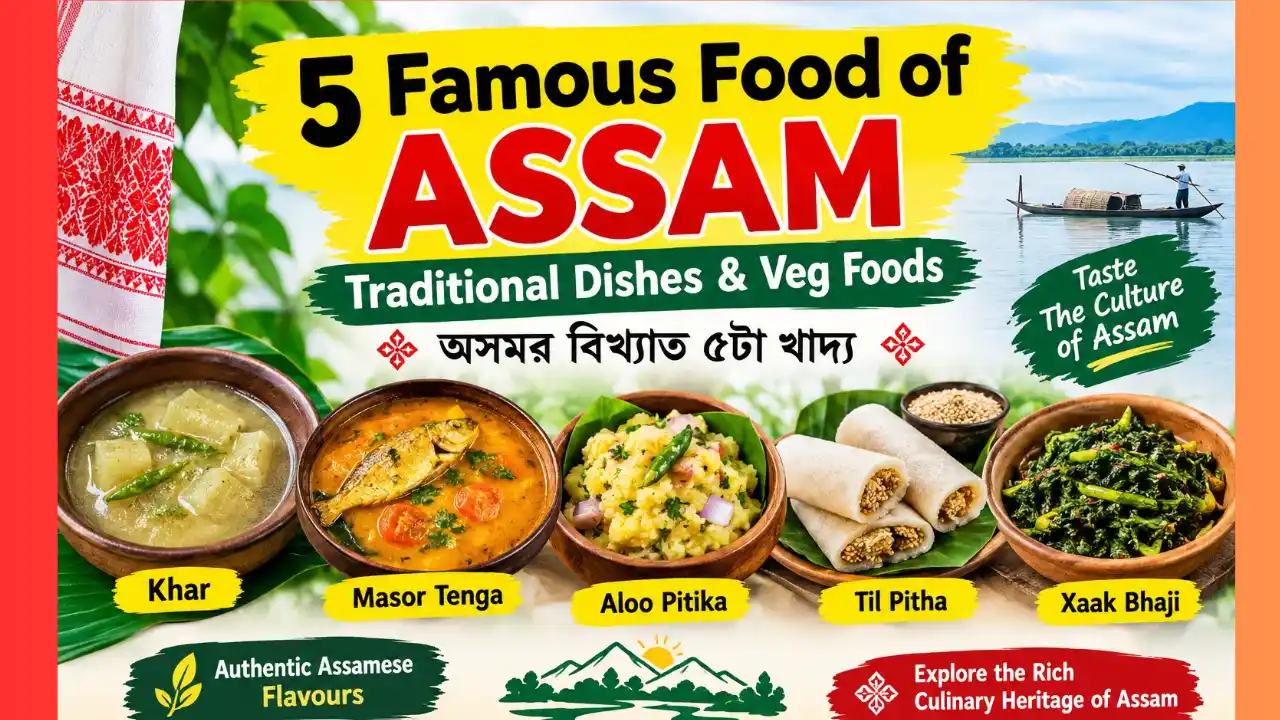
Assam, one of the most beautiful states in Northeast India, is famous for its tea gardens, the mighty Brahmaputra River, colourful festivals, and delicious traditional food. The 5 famous food of Assam reflect the state’s rich culture, natural ingredients, and centuries-old cooking traditions. From the unique taste of Khar to the tangy flavour of Masor Tenga and the sweetness of Til Pitha, Assamese cuisine offers something special for every food lover.
The main food of Assam is rice, which is commonly served with vegetables, lentils, fish, meat, and traditional preparations. Assamese cooking is known for its use of fresh local ingredients, seasonal vegetables, aromatic herbs, and balanced flavours rather than excessive spices.
If you are searching for Assam famous food, 5 famous food of Assam with pictures, 5 famous food of Assam veg, or Assam food images with names, this article will help you discover five popular traditional dishes and understand what makes each one unique.
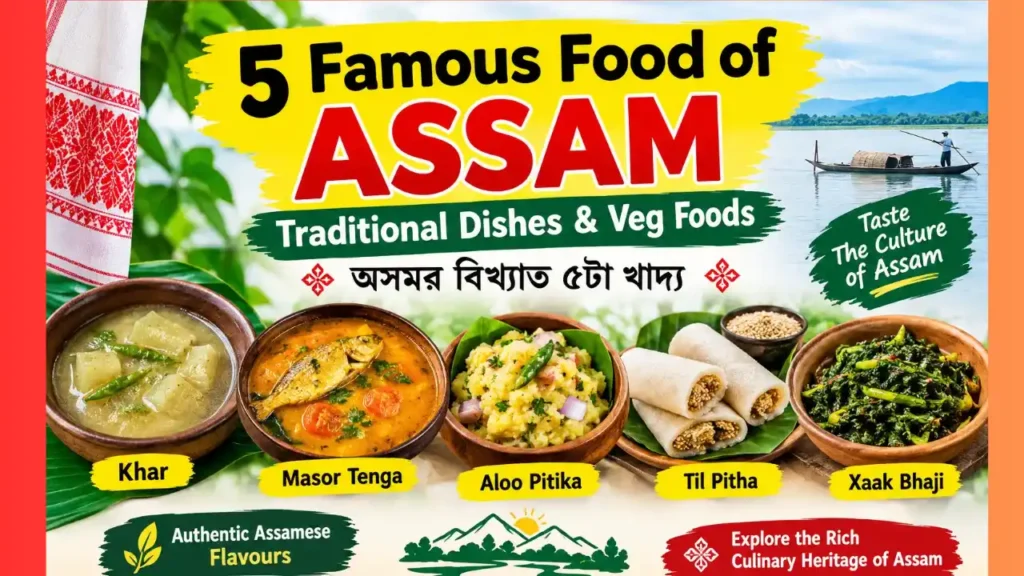
5 Famous Food of Assam
| No. | Famous Assamese Food | Main Ingredients | Food Type |
|---|---|---|---|
| 1 | Khar | Banana-peel ash extract, raw papaya or pulses | Vegetarian and other variations |
| 2 | Masor Tenga | Fish, tomatoes or other souring ingredients | Non-vegetarian |
| 3 | Aloo Pitika | Potato, onion, mustard oil, green chilli | Vegetarian |
| 4 | Til Pitha | Rice flour, sesame seeds, jaggery | Vegetarian |
| 5 | Xaak Bhaji | Local leafy greens, garlic, mustard oil | Vegetarian |
1. Khar – A Unique Traditional Food of Assam
Khar is one of the most distinctive and famous traditional foods of Assam. It is particularly well known for its unusual alkaline flavour and preparation method. Unlike many Indian curries that depend on strong spices, Khar often uses simple ingredients to create a distinctive taste.
What Is Khar?
Khar is an Assamese preparation traditionally made using an alkaline liquid obtained by filtering water through the ashes of dried banana peels or other suitable plant material. This liquid is used to prepare dishes with raw papaya, pulses, vegetables, or other ingredients.
The exact recipe varies from household to household. Some versions are entirely vegetarian, while others include non-vegetarian ingredients.
How Is Khar Prepared?
A common vegetarian version uses raw papaya, pulses, or vegetables. The ingredients are cooked with the traditional alkaline extract and a small amount of seasoning until tender. The result is a simple dish with an earthy, distinctive taste.
Why Is Khar Famous in Assam?
Khar represents the unique culinary identity of Assam. It is served in many traditional Assamese meals and is especially interesting to visitors who want to experience regional food beyond familiar Indian curries.
Best way to eat it: Serve Khar with plain steamed rice and other Assamese side dishes.
Picture suggestion: Add a clear photograph of traditional Assamese Khar served in a bowl with steamed rice.
2. Masor Tenga – Assam’s Famous Tangy Fish Curry
Masor Tenga is one of the best-known dishes in Assamese cuisine. The word “Masor” means fish, while “Tenga” refers to sourness. As the name suggests, this dish is a light, tangy fish curry that is usually enjoyed with steamed rice.
What Makes Masor Tenga Special?
Freshwater fish is an important part of food traditions in many Assamese households. Masor Tenga stands out because of its refreshing sour taste and relatively simple seasoning.
Depending on the recipe, the sourness may come from tomatoes, lemon, elephant apple (ou tenga), or other locally used souring ingredients.
How Is Masor Tenga Prepared?
Fish is generally cleaned, seasoned, and lightly fried before being simmered in a thin curry. The souring ingredient is added with water and seasoning to create a light, flavourful gravy.
Recipes differ across families and regions, so there is no single preparation that represents every Assamese household.
Why Is Masor Tenga Popular?
Masor Tenga is a familiar feature of traditional Assamese meals. Its tangy flavour complements plain rice and makes it a must-try dish for people exploring the state’s culinary heritage.
Best way to eat it: Enjoy it hot with steamed rice and a serving of seasonal vegetables.
Picture suggestion: Add a photograph of Assamese fish tenga curry with tomatoes and fresh herbs.
3. Aloo Pitika – The Most Loved Assamese Comfort Food
Aloo Pitika is one of the most popular vegetarian foods of Assam. It is a simple mashed-potato preparation made with a few everyday ingredients. Although its recipe is uncomplicated, its flavour and place in Assamese home cooking make it special.
What Is Aloo Pitika?
“Aloo” means potato, while “Pitika” refers to a mashed preparation. Boiled potatoes are mashed and mixed with ingredients such as chopped onion, green chilli, mustard oil, salt, and coriander.
Some households add roasted ingredients or other seasonings according to their preferences.
How Is Aloo Pitika Made?
First, potatoes are boiled until soft and peeled. They are then mashed and mixed with chopped onions, green chillies, salt, and a little mustard oil. Fresh coriander can be added for extra aroma.
The ingredients are combined thoroughly and served as a side dish.
Why Is Aloo Pitika Famous?
Aloo Pitika is affordable, easy to prepare, and widely appreciated for its comforting taste. It demonstrates how Assamese cooking can turn simple ingredients into a memorable meal.
It is also a useful option for anyone searching for 5 famous food of Assam veg because the traditional preparation can be made without meat, fish, or eggs.
Best way to eat it: Serve with rice, dal, and leafy vegetables.
Picture suggestion: Add an image of Aloo Pitika garnished with chopped onions, green chillies, and coriander.
4. Til Pitha – A Traditional Assamese Sweet
Til Pitha is a famous Assamese rice-based delicacy closely associated with Bihu celebrations, particularly Magh Bihu. This traditional snack combines rice flour with a filling of sesame seeds and jaggery to create a delicious sweet treat.
What Is Til Pitha?
Til Pitha is a thin, rolled rice cake filled with roasted sesame seeds mixed with jaggery. Its crispy or firm outer layer and sweet, nutty filling make it a favourite during festive occasions.
Preparation methods and textures vary between households.
How Is Til Pitha Prepared?
Rice is traditionally processed into a fine powder. The rice flour is spread over a heated pan to form a thin layer, and a mixture of roasted sesame seeds and jaggery is placed inside.
The pitha is then rolled carefully and cooked until the outer layer sets.
Why Is Til Pitha Important in Assam?
Til Pitha is more than a sweet snack. It reflects Assamese food traditions, seasonal ingredients, and the hospitality associated with festivals and family gatherings.
It is also a great example of vegetarian Assamese food that visitors can enjoy during Bihu celebrations.
Best way to eat it: Enjoy Til Pitha with tea or as a festive snack.
Picture suggestion: Add a photograph showing golden Til Pitha rolls arranged on a traditional plate.
5. Xaak Bhaji – Traditional Assamese Leafy Vegetables
Xaak Bhaji is a popular category of Assamese vegetable preparation made using leafy greens. The word “Xaak” refers to leafy vegetables, while “Bhaji” generally describes a cooked vegetable dish.
Different varieties of greens are used according to season and local availability, making Xaak Bhaji an important part of traditional Assamese vegetarian meals.
What Is Xaak Bhaji?
Assamese households prepare different types of leafy greens, including mustard greens and other locally available varieties. Dhekia, an edible fern, is also popular in regional cooking, although its preparation may differ from ordinary leafy-green bhaji.
The ingredients used depend on the season, community, and household recipe.
How Is Xaak Bhaji Prepared?
The greens are washed carefully and chopped. They are then cooked with a modest amount of mustard oil, garlic, salt, and other seasonings according to the recipe.
Some versions are stir-fried, while others use a little water to soften the vegetables.
Why Is Xaak Bhaji Famous?
Xaak Bhaji reflects the importance of seasonal vegetables in Assamese cuisine. It is a versatile accompaniment to rice and can be prepared in many different ways.
For people looking for vegetarian Assamese food, leafy-green preparations offer a simple way to explore the state’s traditional flavours.
Best way to eat it: Serve with steamed rice, dal, and Aloo Pitika.
Picture suggestion: Add a photograph of freshly cooked Assamese leafy greens served in a traditional bowl.
5 Famous Food of Assam Veg
Assamese cuisine offers many vegetarian dishes in addition to fish and meat preparations. Visitors and vegetarian food lovers can explore local vegetables, rice-based snacks, mashed vegetables, pulses, and traditional sweets.
| Vegetarian Food | Main Ingredients | When to Eat |
|---|---|---|
| Aloo Pitika | Potatoes, onion, mustard oil, chilli | Lunch or dinner |
| Til Pitha | Rice flour, sesame seeds, jaggery | Festivals and snacks |
| Xaak Bhaji | Seasonal leafy greens, garlic | Everyday meals |
| Khar (vegetarian version) | Raw papaya, pulses, traditional alkaline extract | Lunch |
| Narikolor Laru | Coconut and jaggery or sugar | Festivals and snacks |
These dishes offer different textures and flavours, from savoury vegetable preparations to sweet rice-based delicacies. Ingredients and recipes may vary, so people with strict dietary requirements should confirm how a dish has been prepared.
What Is the Main Food of Assam?
Rice is the main staple food of Assam. It is commonly eaten at breakfast, lunch, and dinner in a variety of forms.
Steamed rice is frequently served with dal, leafy greens, vegetable dishes, fish curry, or meat preparations. Traditional Assamese meals also feature rice-based snacks and sweets.
Popular Rice-Based Foods of Assam
- Steamed rice: A staple served with curries and vegetables.
- Jolpaan: A traditional breakfast or light meal that may include chira (flattened rice), muri (puffed rice), or kumol saul (a soft rice variety), accompanied by curd, milk, banana, or jaggery.
- Pitha: Rice-based snacks prepared in different sweet and savoury varieties.
- Bora saul: A sticky rice variety used in traditional foods and festive preparations.
Rice is not merely a staple ingredient; it is also deeply connected with Assamese hospitality, agriculture, and festivals.
Assam Food Images With Names
If you are creating a school project, travel guide, blog post, or food presentation, use photographs with clear captions. These five dishes make a useful starting point.
| Food Name | Suggested Image Caption | Suggested Alt Text |
|---|---|---|
| Khar | Traditional Assamese Khar | Assamese Khar traditional food of Assam |
| Masor Tenga | Assamese Tangy Fish Curry | Masor Tenga famous food of Assam |
| Aloo Pitika | Assamese Mashed Potato Dish | Aloo Pitika vegetarian food of Assam |
| Til Pitha | Traditional Bihu Sweet | Til Pitha famous traditional food of Assam |
| Xaak Bhaji | Assamese Leafy Green Vegetable | Xaak Bhaji Assamese vegetarian food |
Image SEO tip: Use genuine, relevant photographs and descriptive file names, such as khar-assamese-food.jpg or til-pitha-assam.jpg. Add accurate alt text and compress images to help improve page loading speed. Make sure you have permission to use each photograph.
Cultural Importance of Traditional Assamese Food
Assamese food is closely linked with agriculture, local biodiversity, family traditions, and festivals. Rice, leafy greens, freshwater fish, seasonal fruit, and other locally available ingredients influence the dishes prepared in different parts of the state.
Food and Bihu Festivals
Bihu celebrations feature several traditional foods, including pitha and laru. Families prepare and share these items during festive gatherings, preserving recipes and passing them between generations.
Fresh and Seasonal Ingredients
Many traditional recipes rely on seasonal vegetables, herbs, and locally available ingredients. The taste of a dish can change depending on the ingredients used and the cooking methods followed.
Diversity Across Assam
Assam is home to many communities, each with its own food traditions. Assamese cuisine therefore includes more than five famous dishes, and recipes can differ across regions and households.
Frequently Asked Questions (FAQs) 5 famous food of Assam
1. What are the 5 famous food of Assam?
Five famous foods of Assam are Khar, Masor Tenga, Aloo Pitika, Til Pitha, and Xaak Bhaji. Together, they represent distinctive traditional flavours, everyday home cooking, and festive food.
2. What is the main food of Assam?
Rice is the main staple food of Assam. It is commonly eaten with dal, vegetables, leafy greens, fish, and meat, depending on individual preferences and local traditions.
3. What are the famous vegetarian foods of Assam?
Popular vegetarian options include Aloo Pitika, Xaak Bhaji, Til Pitha, Narikolor Laru, and vegetarian versions of Khar. Many Assamese rice-based snacks and vegetable preparations can also be enjoyed without meat or fish.
4. Which Assamese food is famous during Bihu?
Til Pitha, Ghila Pitha, Tilor Laru, and Narikolor Laru are among the traditional foods associated with Bihu celebrations.
5. What makes Assamese cuisine unique?
Assamese cuisine is known for its use of rice, seasonal vegetables, freshwater fish, local herbs, sour ingredients, and distinctive preparations such as Khar. Many traditional dishes use relatively simple seasoning to highlight the natural flavours of their ingredients.
Conclusion
The 5 famous food of Assam provide a glimpse into the state’s rich culinary heritage. Khar introduces a distinctive alkaline preparation, Masor Tenga offers a refreshing sour fish curry, Aloo Pitika represents comforting home cooking, Til Pitha celebrates festive traditions, and Xaak Bhaji showcases seasonal leafy vegetables.
For anyone visiting Assam or learning about its culture, these dishes are an excellent starting point. Vegetarian visitors also have plenty of choices, from Aloo Pitika and leafy greens to traditional pithas and sweets.
Assamese cuisine is much more than a list of recipes. It reflects local ingredients, community traditions, family gatherings, and the everyday relationship between food and life in Assam. Exploring these dishes is a delicious way to discover the state’s cultural identity.
Also read:-

Dharitri Assam is an Assam-focused information platform providing the latest updates on government jobs, education, schemes, scholarships, admit cards, results, and career opportunities. Our goal is to make useful and reliable information easy to understand and accessible to everyone in Assam.